Heritage, Monolith, or Dovetail? A Guide to Choosing the Right Joinery for a Permanent Memorial
Heritage, Monolith, or Dovetail? A Guide to Choosing the Right Joinery for a Permanent Memorial
Choosing a final resting place is a decision rooted in both emotion and logic. In the world of artisan joinery, the “logic” is found in how a vessel handles the natural movement of timber over decades. At A Cut Above Woodworking, we don’t just glue boxes; we engineer memorials using specific corner architecture designed for permanent structural integrity.
Here is a guide to the four distinct joinery styles crafted in our Maida Vale workshop.
1. The Heritage Traditional: Architectural Strength
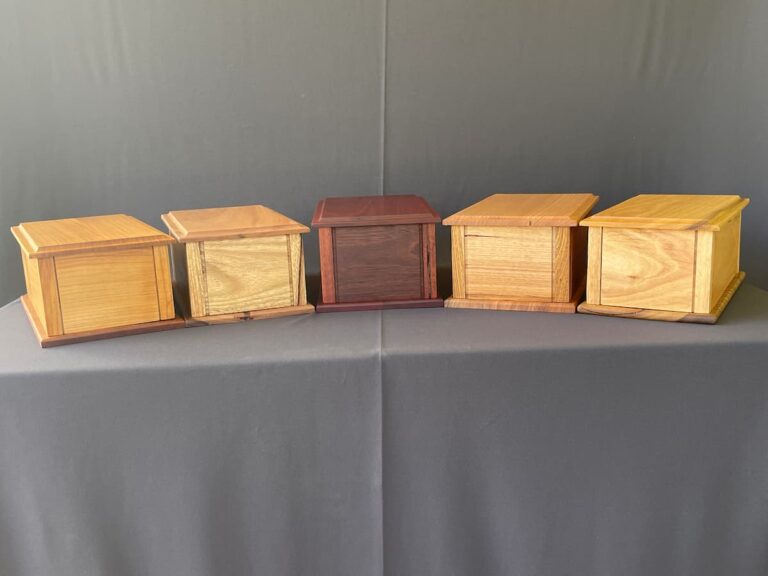
The Traditional Heritage urn is defined by its external corner pillars and classic tongue-and-groove joinery.
- The Construction: By utilizing corner pillars, we create a mechanical interlocking system that provides a massive surface area for bonding. The tongue-and-groove setup ensures the walls are locked into the pillars, creating a rigid, architectural frame.
- The Aesthetic: This style celebrates the geometry of the build, with the pillars providing a stately, framed appearance.
- Best For: Those who want a robust, traditional look where the strength of the joinery is visible and celebrated.
2. The Heritage Mitred: Hidden Reinforcement
For those who prefer a cleaner, more minimalist silhouette, the Heritage Mitred urn offers a seamless transition around the corners, but with a structural secret hidden inside.
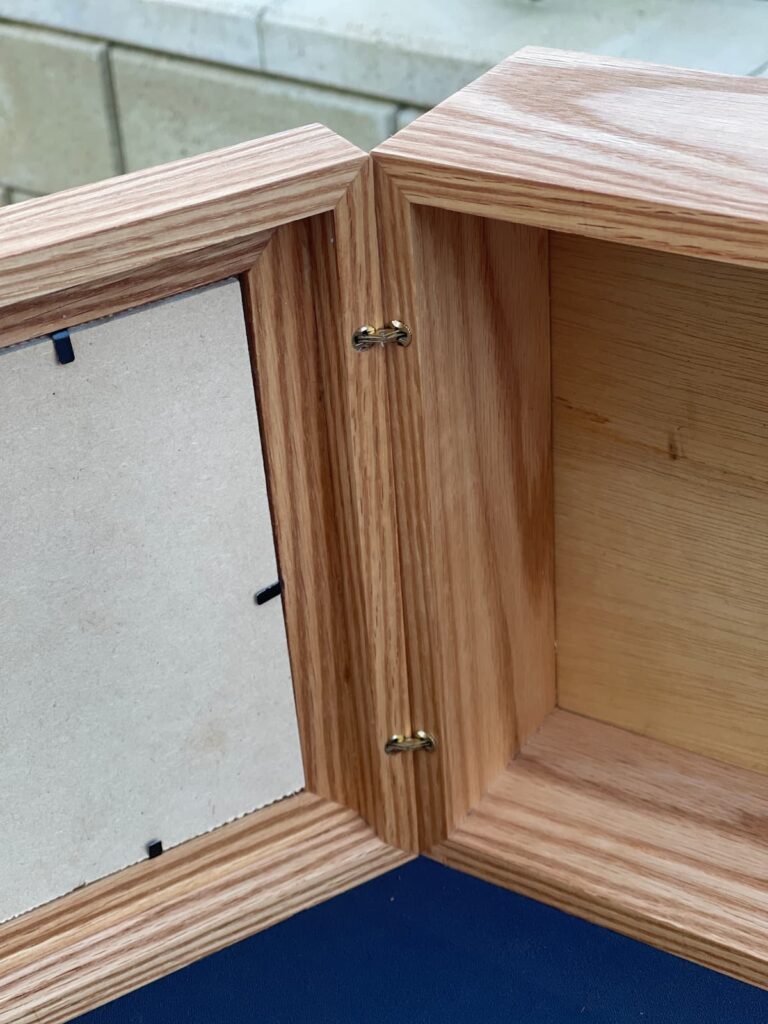
- The Construction: A simple mitre joint can be a point of failure over many years as timber naturally moves. To prevent this, we install internal corner pillars. These pillars act as a “skeleton,” reinforcing the 45-degree join from the inside and ensuring the mitre never opens or weakens over time.
- The Aesthetic: Sleek and uninterrupted grain flow around the entire perimeter of the urn.
- Best For: Families who want a clean, modern aesthetic but refuse to compromise on long-term structural durability.
3. The Monolith Series: The Art of the Spline
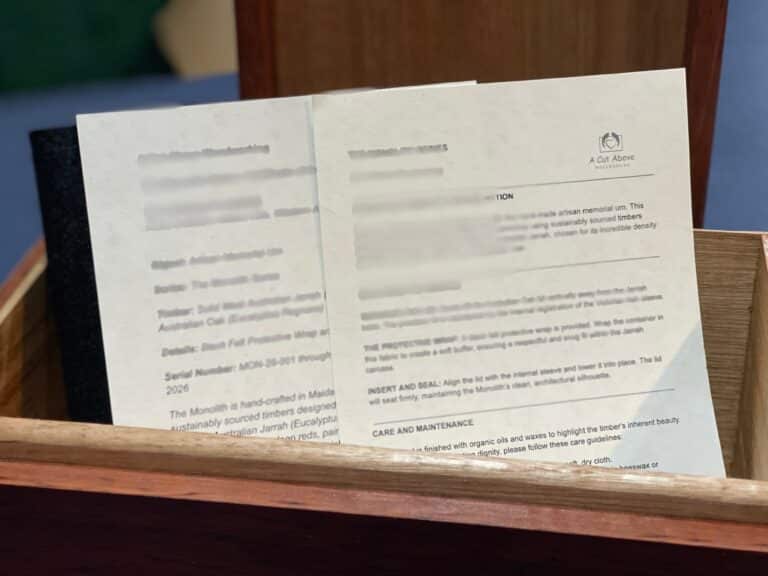
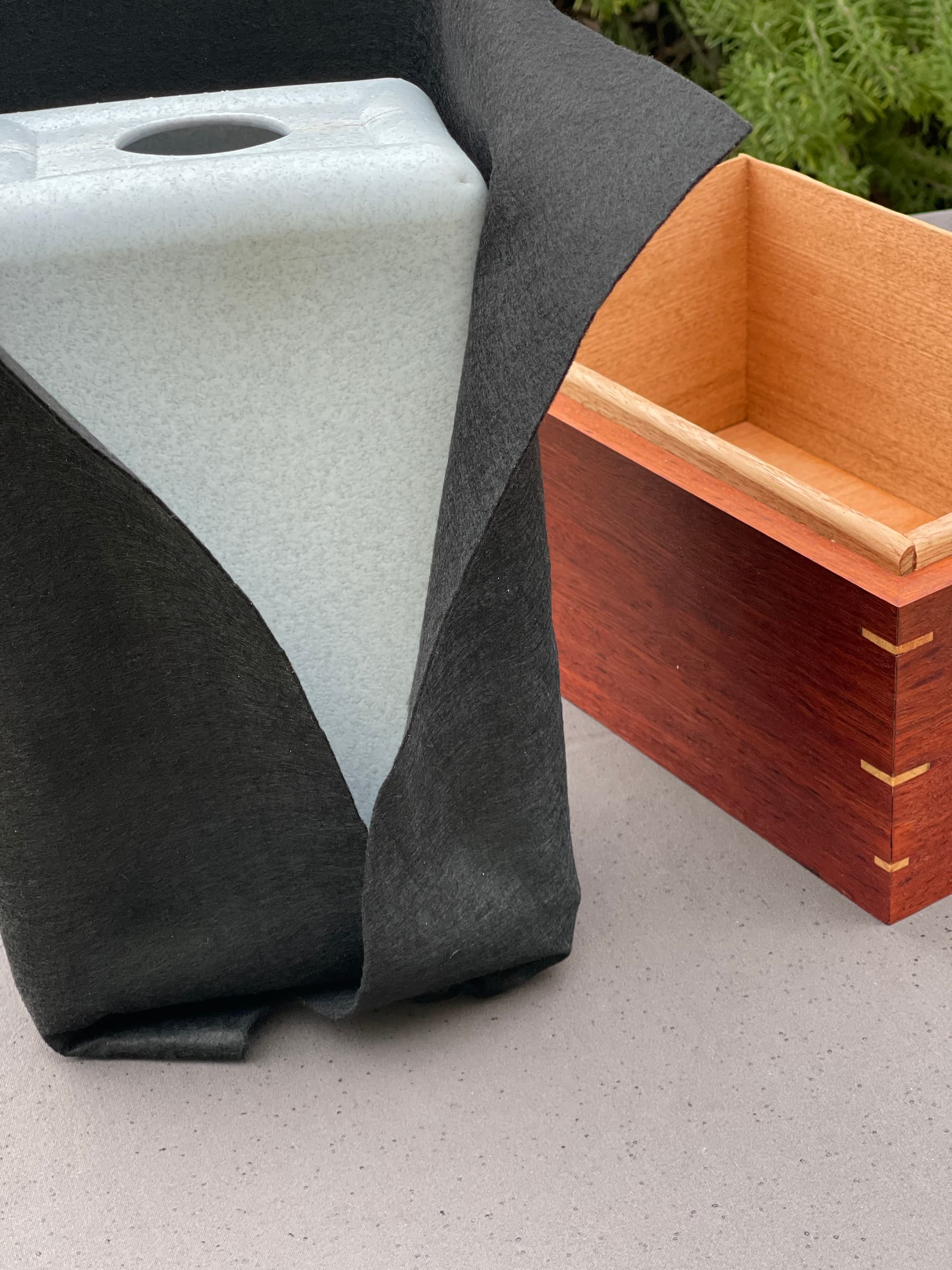
The Monolith is our signature “vessel within a vessel,” featuring an internal solid timber sleeve. To match this high-end interior, the exterior corners are reinforced with contrasting corner splines.
- The Construction: After the mitres are joined, we cut precise slots into the corners and insert splines of a contrasting timber (often Blackwood against Oak). This cross-grain reinforcement “locks” the mitre and provides a decorative accent that is physically impossible to pull apart.
- The Advantage: It combines the internal airtight friction-fit of the 6mm bullnosed sleeve with an exterior joint that is as strong as it is beautiful.
- Best For: Those who appreciate visible technical joinery and want a memorial that showcases the interplay between different Australian hardwood species.
4. The Artisan Dovetail: Maximum Mechanical Lock
The Dovetail urn is the pinnacle of the joiner’s craft, famous for its interlocking fingers of wood. However, our version adds an extra layer of engineering specifically for the base and lid.
- The Construction: While the dovetails lock the walls, we utilize dedicated corner pillars to house the threaded metal inserts for the base screws.
- Why it Matters: We never fasten screws into the “edge grain” of the timber, which is inherently weak and prone to splitting. By using pillars, the screws bite into solid, vertical grain. This ensures the base can be opened and closed securely for generations without ever stripping the wood.
- Best For: The client looking for a Master Artisan piece where every detail—down to the way the screws are seated—is engineered for perfection.
Engineering Peace of Mind
Whether it is the tongue-and-groove of the Traditional or the pillar-seated screws of the Dovetail, the goal is the same: a memorial that relies on the strength of the wood, not the temporary fix of a nail or a staple.
Every piece is finished with natural Hardwax oil and Carnauba polish to protect the timber as thoroughly as our joinery protects the contents. For more information on dimensions and compatibility, please refer to our Sizing Guide.