
What Happens To A Cremation Urn After The Service?
What Happens to a Cremation Urn After the Memorial Service?
For Australian families, a cremation urn does not have one prescribed destination after a memorial service. It can remain at home, be placed in a cemetery or memorial garden, be used when ashes are scattered, or become part of several smaller memorials shared between family members. The difficult part is often not a lack of choices, but having to consider them while grieving.
In the days surrounding a funeral or memorial, attention naturally goes to the immediate things: arranging the service, contacting relatives, choosing music, preparing a eulogy and simply getting through the day. What happens to the urn afterwards can feel like a decision for later. And that is perfectly workable, because in many circumstances, there is no need to turn an emotionally significant decision into a hurried one.
Many families collect the urn from the funeral director or crematorium some days after the service and bring it home without a firm plan. That is a common and entirely reasonable starting point. What follows is a practical look at the options, the questions worth asking and a gentle way to reach a decision in your own time.
The main thing to know
There is no single “correct” place for cremated remains after a memorial service. Australian families may keep an urn at home, place it with another family member, arrange interment in a cemetery or memorial garden, use a columbarium niche, scatter the ashes somewhere meaningful, divide them between relatives, or retain smaller portions in keepsake urns or memorial jewellery.
These options are not mutually exclusive. A family might keep the urn at home for a year, then scatter part of the ashes at a favourite beach and inter the rest in a family grave. Cremation allows that kind of layered approach, which can help when different people need different things from the memorial.
Why the question often arrives after the funeral
Families rarely begin funeral planning by thinking about where an urn will be five years from now. The service itself is immediate; the permanent memorial is not. Funeral arrangements can also involve a rapid sequence of unfamiliar decisions. Once the ceremony is organised, it is easy to assume that the remaining choices will somehow resolve themselves. Families may also expect that there is a customary next step, when cremation actually allows considerable flexibility.
There is another, quieter difficulty. Different people may want different things. One sibling may like the thought of having the urn at home. Another may prefer a permanent cemetery memorial. Someone living interstate may hope to keep a small portion of the ashes. These preferences do not necessarily mean anyone is grieving “wrong”; they simply show why the decision deserves conversation rather than assumption.
It can help to have that conversation deliberately rather than letting it happen in passing. A family meal, a phone call with interstate relatives or a short message thread where everyone can share their thoughts gives each person a chance to be heard. Even when the family does not reach agreement straight away, knowing what matters to each person makes the eventual decision easier to accept.
Six paths families commonly consider
The practical choices can be reduced to a manageable set:
● Keep the urn permanently at home. This provides a private, accessible memorial and allows the family to choose surroundings that feel personal. Many families find comfort in having the person close, especially in the first months after a loss.
● Place the urn in a relative’s home. This can suit families where one person naturally becomes the custodian, although it is worth discussing what should happen if that person moves, downsizes or dies. Writing down the agreed plan, even informally, can prevent uncertainty later.
● Inter the ashes in a memorial garden, cemetery or columbarium. This creates a recognised location that relatives and future generations can visit. Brisbane City Council, for example, provides both garden memorials and wall memorials for ashes, as well as the option of interring ashes in gravesites. A permanent site can be particularly meaningful for grandchildren and relatives who want somewhere to return to on anniversaries.
● Scatter the ashes. A beach, garden, river, bushland setting or another significant location may carry strong personal meaning. Permission and local requirements should be checked before scattering on land or in public places. Some families hold a small ceremony at the scattering, with readings, music or a shared meal afterwards.
● Divide the ashes between family members. Cremated remains do not necessarily have to stay together. Splitting the remains into smaller keepsake urns allows several family members to keep their own memorial in different locations. This can be especially helpful when relatives live in different states or overseas.
● Use keepsake urns, jewellery or another memorial form. A small amount can be retained in a miniature urn or incorporated into certain memorial jewellery or artworks, while the remainder is kept, interred or scattered elsewhere. These pieces offer a way to carry a personal connection into everyday life.
Comparing the choices
Questions worth considering
Urn kept at home Privacy, closeness and everyday accessibility Who will care for it long term? What happens after a move or change of household?
Urn with a family member A personal custodian and familiar setting Do other relatives feel comfortable with the arrangement? Is there a longer-term plan?
Memorial garden or columbarium A defined place to visit and a potentially lasting public memorial What are the fees, interment rights, access arrangements and cemetery rules?
Scattering A strong connection with a meaningful landscape or place Is permission required? Will the location remain accessible? Is everyone comfortable with irreversibility?
Dividing the ashes Allows several relatives to retain a physical connection How should the ashes be divided, and does this fit the deceased person’s wishes or family beliefs?
Keepsake urn or memorial jewellery A small, portable and highly personal memorial Who would like one, what proportion of ashes will be used, and what will happen to the remainder?
When the urn becomes part of the home
Bringing an urn home does not necessarily mean simply placing it on a shelf. Some families gradually create a small remembrance area around it: perhaps a favourite photograph, a handwritten note, flowers or another object closely associated with the person.
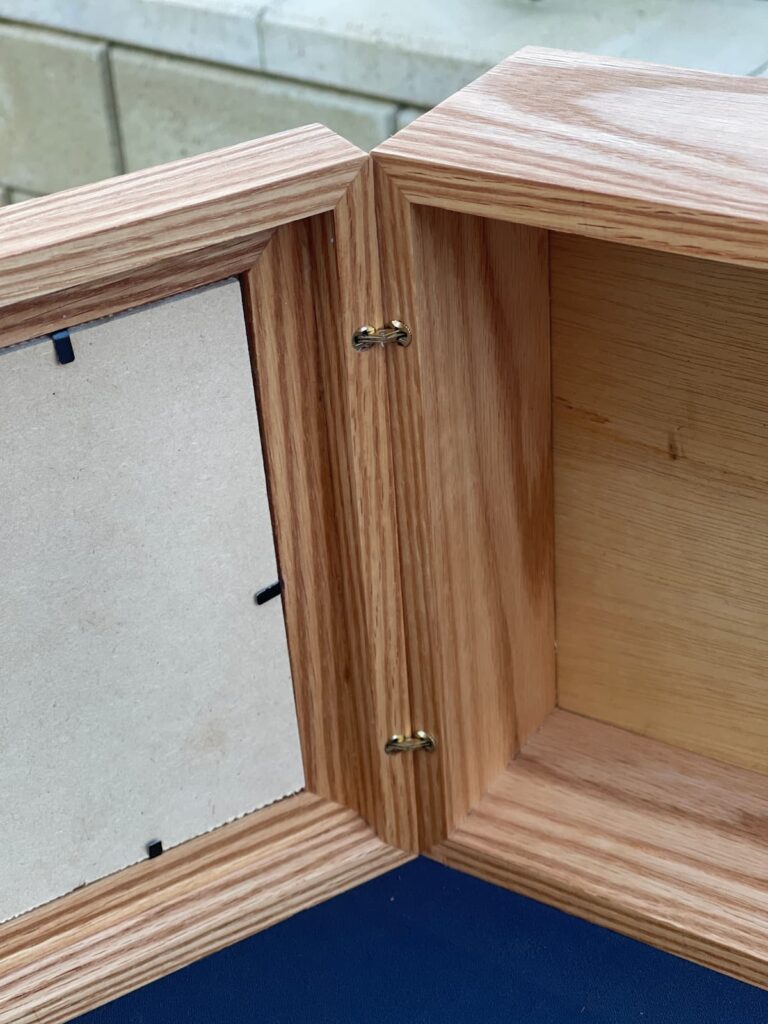
Photographs can be especially important because they restore the person’s face and life story to what might otherwise feel like a solitary memorial object. Families who have several photographs they want to display need not commission bespoke framing for every image. Ready-made options are available online in numerous standard dimensions and finishes, so a suitable picture frame can be chosen for treasured photographs and arranged beside the urn. The result can be less like “storing an urn” and more like creating a deliberate place in the home where a life continues to be remembered.
Placement matters too. A quiet spot away from heavy foot traffic, direct heat and strong sunlight helps protect both the urn and any photographs nearby. Some families choose a living area where the person is naturally part of daily life, while others prefer a more private room. The remembrance area can also change over time, with new photographs, cards or seasonal flowers added on birthdays and anniversaries.
Choosing an urn that belongs in the home
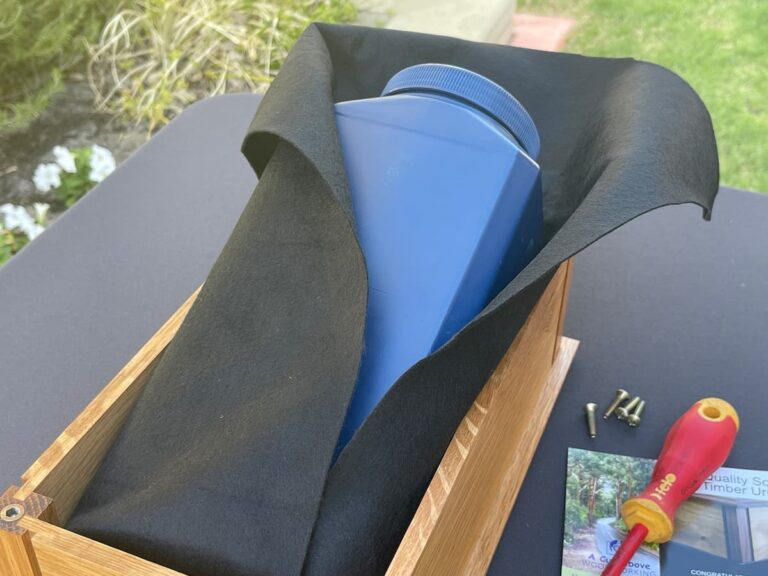
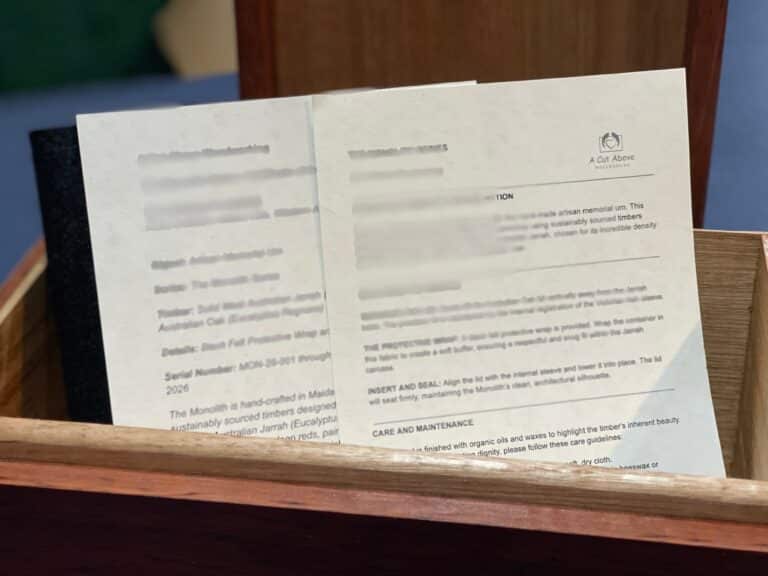
When a family decides that an urn will remain permanently in the home, the vessel itself can take on a different role. It is no longer simply the container used after cremation; it becomes part of the family’s long-term memorial. For families looking for a handcrafted timber option, A Cut Above Woodworking is a Perth Hills workshop in Maida Vale, Western Australia, making bespoke solid-timber cremation urns for home memorials. Its work includes Jarrah Two tone Series memorials and companion pet memorials, with pieces individually machined, joined and hand-finished from solid hardwood rather than veneers or MDF. For a family wanting warmth and permanence rather than a temporary-looking container, speaking directly with the maker can also make the process of choosing the memorial feel more considered and personal.
The container supplied by a crematorium is usually designed to be functional rather than lasting, which is why many families transfer the ashes into a permanent urn once they know it will stay at home. It is worth considering how the urn will look alongside the furniture and photographs around it, whether its size suits the space, and whether a name plate or engraving would make it feel more personal.
Moving or travelling with an urn
Life does not stand still after a loss. Families move house, relocate interstate, or decide to take a loved one’s ashes back to a birthplace or a favourite place overseas. Knowing a few practical points in advance can make these journeys much less stressful.
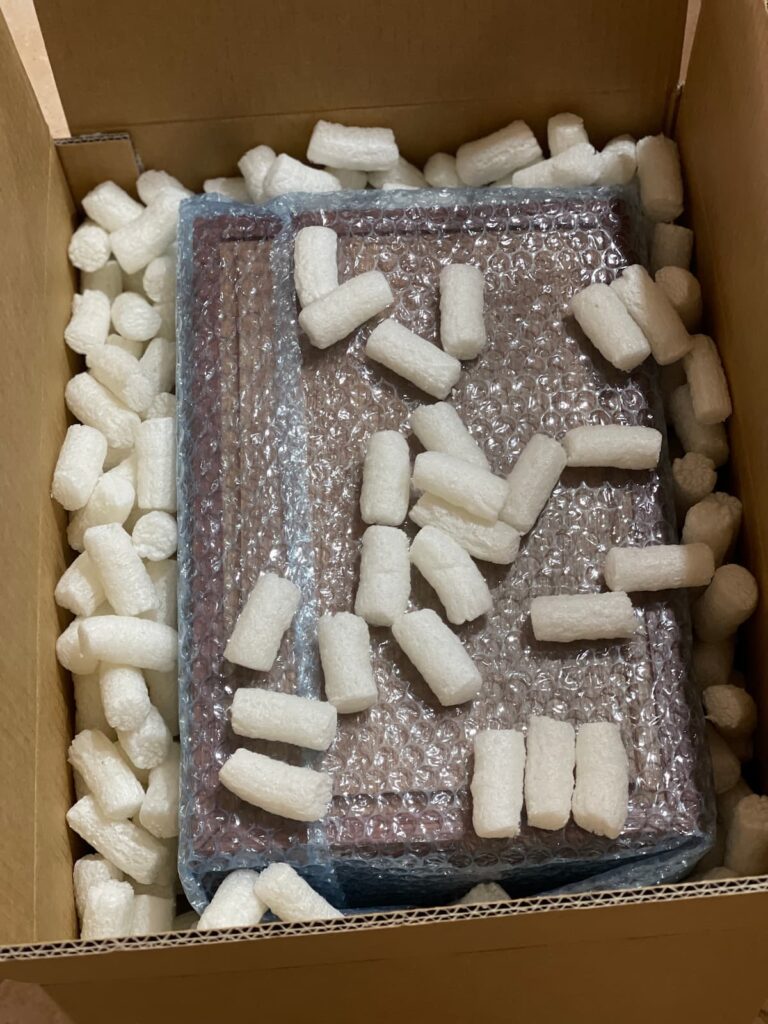
Within Australia, travelling with ashes by car is generally straightforward. Keeping the urn secure, upright and cushioned is the main consideration. For flights, airlines have their own rules about carrying cremated remains, and the Australian Border Force advises that it is best to contact the airline or shipping line before travelling. Carrying the urn in hand luggage, along with paperwork from the funeral director or crematorium, can help at security screening.
Bringing ashes into Australia from overseas is also possible. The Australian Government’s Department of Health notes that no import permit, death certificate or cremation certificate is required for cremated remains from a human biosecurity perspective. The urn itself does need attention, however. It must be free from soil, plant material and insects, and a container made from wood must be declared on the Incoming Passenger Card for inspection on arrival. Families travelling overseas should also check the rules of the destination country, since some have their own documentation requirements.
A five-step way to make the decision without rushing
When the choices feel too large, it can help to separate the decision into smaller questions.
- Start with any known wishes.
Consider whether the person who died ever expressed a preference about scattering, burial, keeping ashes at home or a particular location. Wishes may appear in a will, a funeral plan or simply in remembered conversations with family and friends. - Ask what the family needs from the memorial.
Is having somewhere physical to visit important? Would having the urn nearby be comforting? Are family members spread across Australia or overseas? The answers often point naturally towards one or two options. - Separate reversible decisions from irreversible ones.
Keeping an urn at home for now leaves other possibilities open. Scattering is different: once ashes have been dispersed, they generally cannot be recovered. Families unsure about scattering sometimes keep a small portion aside first. - Check the practical details.
For cemetery interment, ask about fees, tenure or interment rights, plaque requirements and urn dimensions. If scattering is planned, check the rules applying to the particular land, reserve, beach or waterway rather than assuming the same requirements apply everywhere. - Revisit the choice when the family is ready.
A temporary arrangement can simply be temporary. Keeping an urn safely at home while everyone considers the possibilities can create breathing room for a more durable decision. Some families choose a meaningful date, such as a birthday or the first anniversary, as a natural time to revisit the question.
There is value in leaving the decision open
Not every family is ready to decide on a permanent memorial immediately after cremation. The Metropolitan Cemeteries Board in Western Australia recognises that families may keep ashes at home, scatter them somewhere significant or divide them between several smaller urns.
That flexibility matters because grief rarely follows an administrative timetable. A choice that feels impossible in the first few weeks may become much clearer after several months have passed. Family members may also need time to talk through different preferences, particularly when relatives live in different places or have different ideas about remembrance.
Leaving the decision open is not the same as avoiding it. Agreeing on who will look after the urn in the meantime, and roughly when the family will talk again, gives everyone reassurance that the question has not been forgotten.
One official resource worth keeping
Rules and practical considerations can vary according to where ashes will ultimately be placed or scattered, particularly when public land, waterways, cemeteries or managed reserves are involved.
For families working through the wider practical and financial decisions that can accompany a funeral, the Australian Government’s Moneysmart guide to paying for a funeral is a useful independent resource. It covers funeral costs, ways funerals may be paid for and considerations around funeral insurance and prepaid funerals.
For location-specific questions about cremated remains, families should check directly with the relevant cemetery, council, land manager or state authority before acting. A short enquiry beforehand can prevent a meaningful plan from running into an unexpected practical restriction. Cemetery staff and funeral directors are usually well placed to explain local options and can often point families towards the right contact.
Frequently asked questions
Can cremated ashes simply stay at home?
Yes. Keeping cremated remains in an urn at home is a recognised option. The urn may remain permanently in the home or stay there while the family considers another form of memorialisation later.Do ashes have to remain together?
No. Families may choose to divide cremated remains between relatives or use portions for different memorial purposes. Smaller urns and memorial jewellery are among the options available when ashes are divided.Can ashes be placed in a cemetery even though the person was cremated?
Yes. Cremated remains can be interred. Depending on the cemetery, options may include a small plot, an existing family grave, a memorial garden or a niche in a columbarium wall.Can ashes be scattered anywhere in Australia?
Do not assume so. Requirements can depend on the place, landowner and relevant authority. Families considering a beach, park, waterway, reserve or other public location should check the applicable state, territory, council or land-manager requirements before proceeding. In Victoria, for example, the Greater Metropolitan Cemeteries Trust explains where ashes can and cannot be scattered, noting that scattering is not permitted at places such as the Royal Botanic Gardens in Melbourne or the MCG.Can ashes be taken on a plane?
Generally, yes, although each airline sets its own requirements. Contacting the airline before travelling and carrying paperwork from the funeral director or crematorium can help the journey go smoothly.What if the family cannot decide yet?
The decision does not have to be forced simply to create a sense of completion. Provided the ashes are being kept securely and appropriately, retaining the urn while the family discusses its longer-term wishes can preserve several future options.
Give the decision the time it deserves
The memorial service marks an important farewell, but it does not have to determine the final destination of a loved one’s ashes. An urn can remain at home, become part of a permanent memorial, be divided among family members or eventually accompany the ashes to a meaningful place. Taking time allows practical questions and emotional needs to become clearer. A considered decision made months later can be every bit as meaningful as one made immediately after the service.